
South Indian maritime kingdoms
Chola maritime power, merchants and the Bay of Bengal
The Cholas built one of medieval South India’s most powerful states, but their maritime importance cannot be reduced to a simple claim that they “ruled the seas.” Their ports, merchant organizations, temple economy, campaigns in Sri Lanka and the 1025 expedition against Srivijaya reveal a more complex relationship between commerce, naval capability and political ambition.
From the Kaveri delta to the sea
The Chola heartland developed around the Kaveri delta, one of South India’s richest agricultural regions. Rivers and canals connected inland production with coastal markets, while ports on the Coromandel Coast opened toward Sri Lanka and the Bay of Bengal. This combination of agrarian wealth and maritime access gave Chola rulers a strong fiscal base and merchants a route from inland production zones to overseas shipping.
Nagapattinam became especially important as a port and religious centre. Archaeological finds, inscriptions and foreign references indicate sustained overseas connections. The port should not be imagined as a single royal naval base. It functioned within a larger commercial landscape involving merchants, temples, religious institutions and ships arriving from other parts of the Bay of Bengal and Southeast Asia.
Merchant organizations connected Tamil regions with overseas markets
South Indian merchant groups such as the Ainnurruvar, Manigramam and Nanadesi appear in inscriptions across South and Southeast Asia. Their presence demonstrates organized commercial activity over long distances, though the exact relationship among guild labels, individual merchants and state authority varied by place and period. These merchants moved textiles, aromatics, metals and other goods through ports where several commercial communities interacted.
The merchant evidence is important because it prevents Chola maritime history from becoming only a story of royal fleets. Commerce depended on private and corporate actors who negotiated access, financed movement and maintained relationships beyond Chola political borders. Tamil commercial influence could extend into places that were never politically controlled by the Chola state.
Sri Lanka was central to Chola maritime strategy
Chola campaigns in Sri Lanka predated the famous Southeast Asian expedition and demonstrate sustained interest in the island’s political and economic importance. Sri Lanka sat across routes linking the Coromandel Coast with the western Indian Ocean and Southeast Asia, while its ports and resources made control strategically valuable.
Rajaraja I and Rajendra I extended Chola power into Sri Lanka through military campaigns, but control was contested and changed over time. Treating Sri Lanka merely as a stepping stone for overseas expansion obscures its own political history and the resistance Chola forces encountered.
Rajendra I’s 1025 expedition targeted Srivijayan centres
An inscription from Rajendra I’s reign records a campaign against a series of places associated with the Srivijayan sphere, including Kadaram, commonly linked with Kedah. The expedition is one of the clearest examples of a South Asian state projecting organized military force across the Bay of Bengal. It demonstrates maritime logistical capability beyond ordinary merchant travel.
The campaign does not prove that the Cholas permanently conquered or administered the entire Srivijayan maritime system. Evidence points more strongly to a powerful raid or intervention aimed at strategic centres. Srivijaya remained an important regional power afterward. The distinction matters because modern retellings often transform one campaign into an enduring “Chola empire” across Southeast Asia.
Nagapattinam also records diplomacy and religious exchange
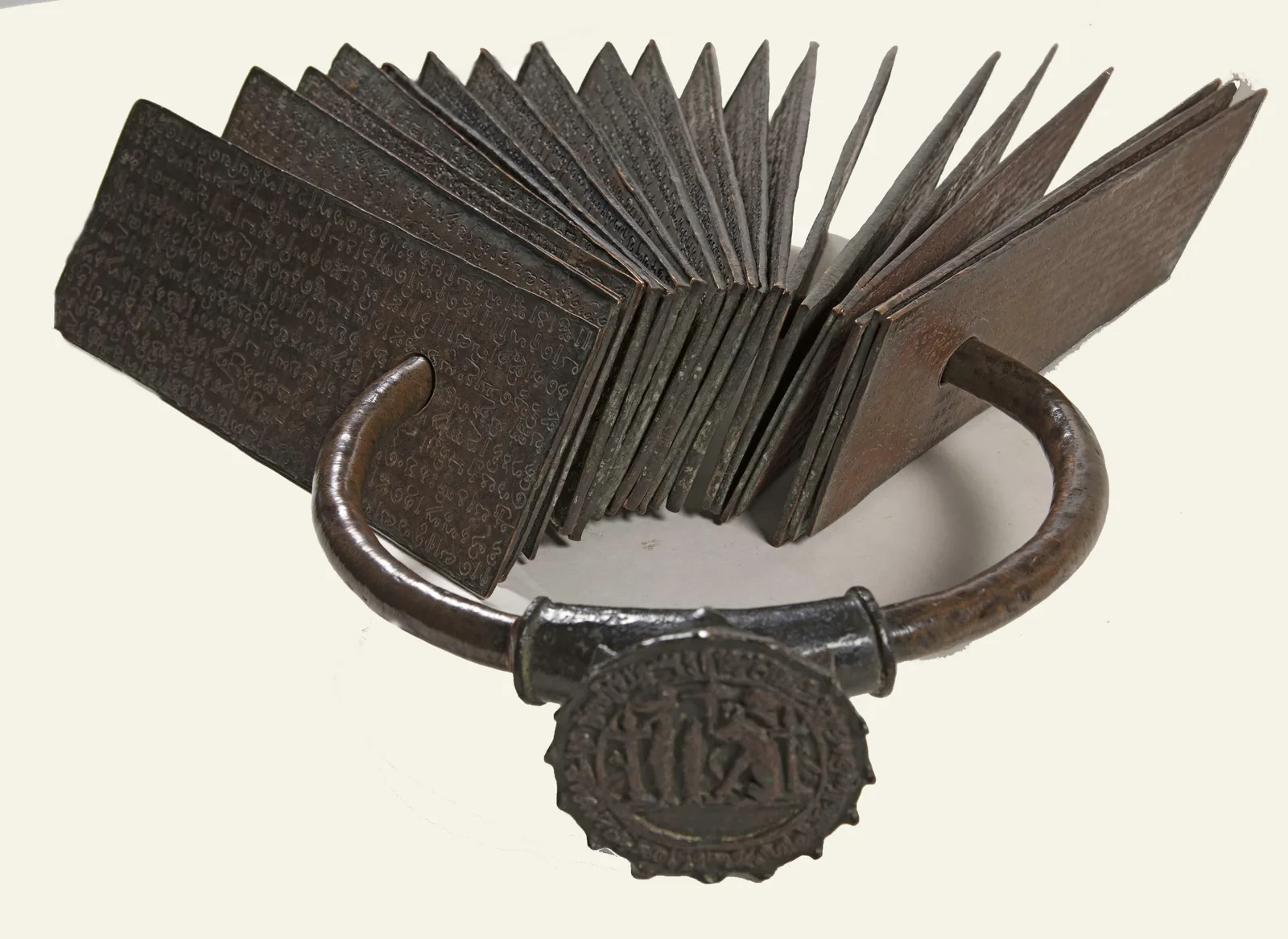
The Leiden copper plates preserve a charter connected with a Buddhist monastery at Nagapattinam founded by a ruler of Srivijaya and supported by Chola authority. This is unusually valuable evidence because it records a named institutional relationship between South India and Southeast Asia rather than relying only on later narrative tradition.
The monastery illustrates the overlap of religion, diplomacy and commerce. Buddhist institutions could serve travelling communities and express political relationships, while port cities brought together people whose identities were not limited to one kingdom or faith.
What did Chola ships look like?
No complete Chola warship survives with enough evidence to justify the detailed specifications often repeated online. South Indian maritime traditions certainly used substantial sewn or fastened wooden vessels, and temple art, inscriptions, literary references and wider Indian Ocean shipbuilding evidence help establish plausible contexts. But claims about exact ship length, crew size or named “classes” should be treated cautiously unless tied to reliable evidence.
This uncertainty does not diminish Chola maritime capability. Moving troops across the Bay of Bengal required vessels, pilots, provisioning and coordination at scale. The historically responsible approach is to explain those capabilities without inventing technical details that the archaeological record cannot support.
Monsoons shaped commercial and military timing
Bay of Bengal travel was structured by seasonal wind systems. Merchants and commanders had to consider when winds favoured movement toward Southeast Asia and when return travel became practical. Ports therefore functioned within seasonal calendars rather than continuous modern schedules.
Monsoon knowledge also affected risk. Delayed departures could expose ships to adverse weather or strand merchants until the next useful wind regime. Maritime power depended partly on understanding these rhythms and maintaining ports capable of supporting people and cargo during long waits.
The Cholas belonged to an older South Indian maritime world
Chola overseas activity did not begin Indian seafaring. Pandya pearl fisheries, Chera pepper trade, Pallava connections and earlier Tamil contacts with the Roman world all demonstrate a deep maritime history predating the imperial Cholas. The Chola period is distinctive because a powerful agrarian state combined these inherited commercial connections with unusual military reach.
Placing the Cholas inside that longer history avoids two opposite errors: minimizing South Indian seafaring, and exaggerating the Cholas into a modern-style ocean empire. Their real achievement is more interesting. They operated within one of the world’s most active maritime zones and showed that South Indian political power could reach far beyond the peninsula.
What the evidence actually allows us to say
Inscriptions provide the strongest evidence for campaigns, donations, merchant groups and royal claims. Archaeology provides material evidence for ports and imported goods. Southeast Asian inscriptions and monuments help trace Tamil merchant presence and political relationships. Later literary traditions preserve additional memory but require careful dating and context.
Together, these sources support a picture of intense maritime commerce, strong port institutions, merchant mobility and episodic naval projection. They do not support every popular claim of permanent Chola colonies, precise fleet numbers or uniform control over Bay of Bengal trade. A useful account should make that distinction visible rather than burying it in a footnote.
Evidence, chronology and the limits of reconstruction
The maritime history of Chola Maritime Power and Bay of Bengal Trade has to be reconstructed from evidence that survives unevenly. Ports, imported ceramics, anchors, inscriptions, coins, ship remains and foreign accounts can each establish part of the picture, but none can carry the whole argument alone.
An imported object proves movement or exchange. It does not by itself identify the crew, establish one direct voyage or prove political control. Chronology matters because ports shifted, dynasties changed and vessel traditions evolved.
What sustained regular participation in sea travel
Regular seafaring required an economy behind the waterfront. Crews needed water, food, repair materials, pilots and seasonal knowledge, while shipwrights needed timber, fibres, tools and skilled labour.
Merchants depended on storage, credit, brokers and trusted partners across languages and political borders. Maritime strength is therefore better understood through working systems than unsupported fleet claims.
How this tradition fits the wider history of sea travel
Chola Maritime Power and Bay of Bengal Trade belonged to connected seas rather than an isolated national story. Cargo often changed hands several times, and sailors borrowed useful practices from neighbouring communities while retaining local traditions.
Political influence could cross water without becoming territorial rule. Comparing maritime systems makes local solutions clearer because every seafaring society faced recurring problems of weather, navigation, provisioning, harbour access and risk.