
Historic ports
Alexandria: Mediterranean harbour, Nile gateway and grain port
Founded by Alexander the Great in 331 BCE, Alexandria became one of the Mediterranean’s most important ports because it connected overseas shipping with the Nile valley, Egyptian grain production and a cosmopolitan urban economy. Its maritime history combines harbour engineering, trade, scholarship and changing coastlines.
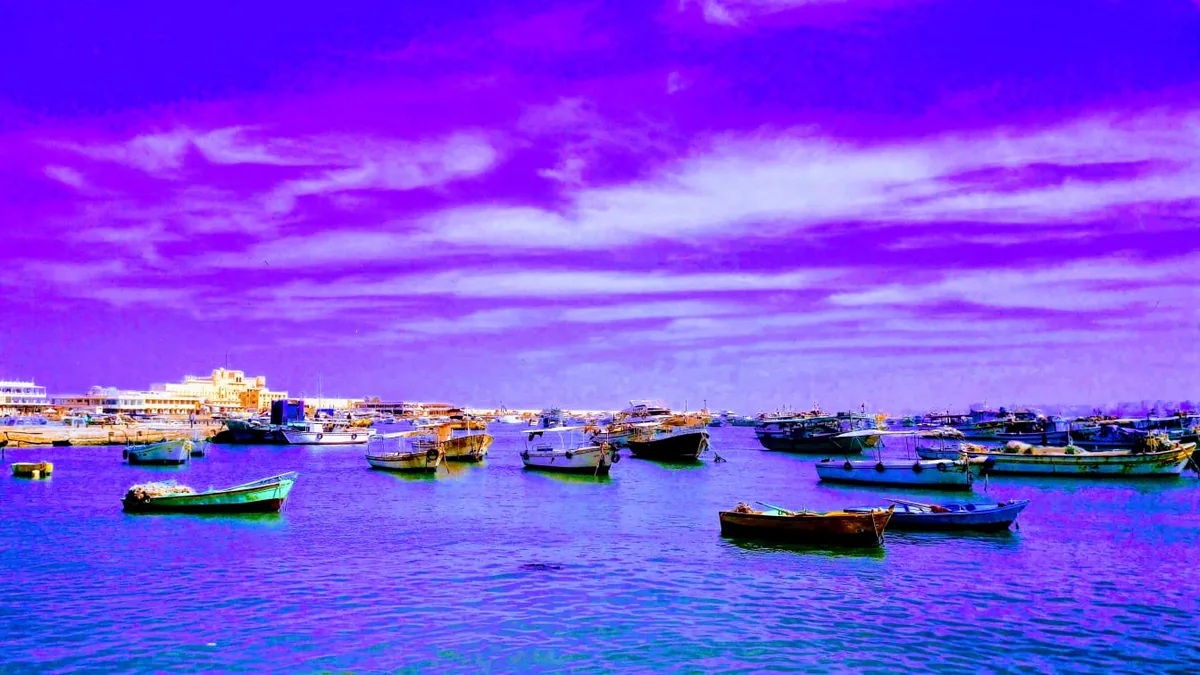
Geography made Alexandria a transfer point between sea and river systems
Alexandria sat on the Mediterranean coast near routes into the Nile Delta, giving merchants access to one of the ancient world’s richest agricultural regions. Goods arriving by sea could move inland, while Egyptian products flowed toward overseas markets.
The city’s importance therefore came from connection rather than harbour shelter alone. Its economic hinterland extended far beyond the coast.
Pharos became both landmark and infrastructure
The lighthouse on Pharos island became one of antiquity’s most famous structures. Beyond its symbolic status, a major harbour entrance required visible navigational references for ships approaching an unfamiliar coast.
Ancient descriptions and underwater archaeology help reconstruct the harbour environment, although later earthquakes and coastal change altered the landscape substantially.
The Heptastadion reshaped the harbour
A causeway linking Pharos with the mainland divided the waterfront into eastern and western harbour zones. Over centuries, sediment accumulated around this structure and helped transform the coastline.
The engineering demonstrates how a city could actively reshape maritime geography, creating benefits for harbour use while producing long-term environmental consequences.
Grain turned the port into strategic infrastructure
Egyptian grain became essential to the food supply of Hellenistic and later Roman Mediterranean cities. Alexandria concentrated grain before shipment, requiring storage, administration and fleets of merchant vessels.
This routine freight traffic was economically more important than the occasional spectacular voyage. A major city depended on thousands of ordinary logistical movements.
Merchants and communities made Alexandria cosmopolitan
Greek, Egyptian, Jewish and other communities lived and traded within the city, while merchants arrived from across the Mediterranean and Red Sea world. Commercial exchange therefore moved languages, religious practices and ideas along with cargo.
The famous Library and scholarly institutions belonged to the same urban environment created by royal investment and international connectivity, though intellectual history should not be confused directly with port administration.
Roman rule integrated Alexandria into imperial supply systems
After Rome took control of Egypt, the city’s grain role became even more politically important. State oversight, private merchants and harbour labour all contributed to shipments toward Italy.
The port’s strategic value meant that control of Egypt had consequences across the Mediterranean, especially when grain supply became disrupted.
The coastline preserves a layered archaeological record
Earthquakes, subsidence and urban rebuilding submerged or altered parts of ancient Alexandria. Underwater remains around the harbour preserve architectural fragments and evidence that no longer survives above ground.
This makes Alexandria a useful example of why maritime archaeology must account for environmental change. The ancient harbour cannot be understood simply by looking at the modern waterfront.
Alexandria remained maritime after antiquity
Political regimes changed from Byzantine to Islamic, Ottoman and modern Egyptian periods, but the city retained value as a Mediterranean gateway. Modern harbour development transformed the waterfront again.
The continuity shows how exceptional geography can support repeated maritime importance even when institutions, ships and trade goods change completely.
The harbour depended on a much larger hinterland
Alexandria as a Maritime Port worked because ships connected with systems beyond the shoreline. Cargo reached the waterfront by river, road, pack animal or smaller coastal craft, while imported goods moved inland through another chain of carriers and markets.
Food, water, timber, rope, labour and storage also had to be supplied continuously. Geography created opportunity, but inland access, merchant confidence and reliable provisioning determined whether traders returned.
Merchant communities made the waterfront function
Busy ports brought together local traders, visiting merchants, brokers, interpreters, pilots, dock workers, religious communities and officials. Seasonal waiting could turn a commercial stop into a long stay.
Authorities regulated customs and access, but merchants could redirect traffic toward rival ports when fees, conflict or interference became too costly.
Coastlines and commercial importance changed over time
The modern shoreline around Alexandria as a Maritime Port cannot simply be projected into the past. Rivers silt, channels migrate, storms alter sandbars and later construction can bury earlier waterfronts.
Political change mattered too. A harbour could prosper under several unrelated regimes or lose traffic when another port offered safer access and better commercial terms.