
Historical vessels
Viking longships: speed, shallow draft and military mobility
The Viking longship became an icon because its design supported fast coastal movement, beach landings, river travel and military transport. It was one part of a much wider Norse shipbuilding tradition and should not be confused with the broader cargo vessels used for settlement and trade.
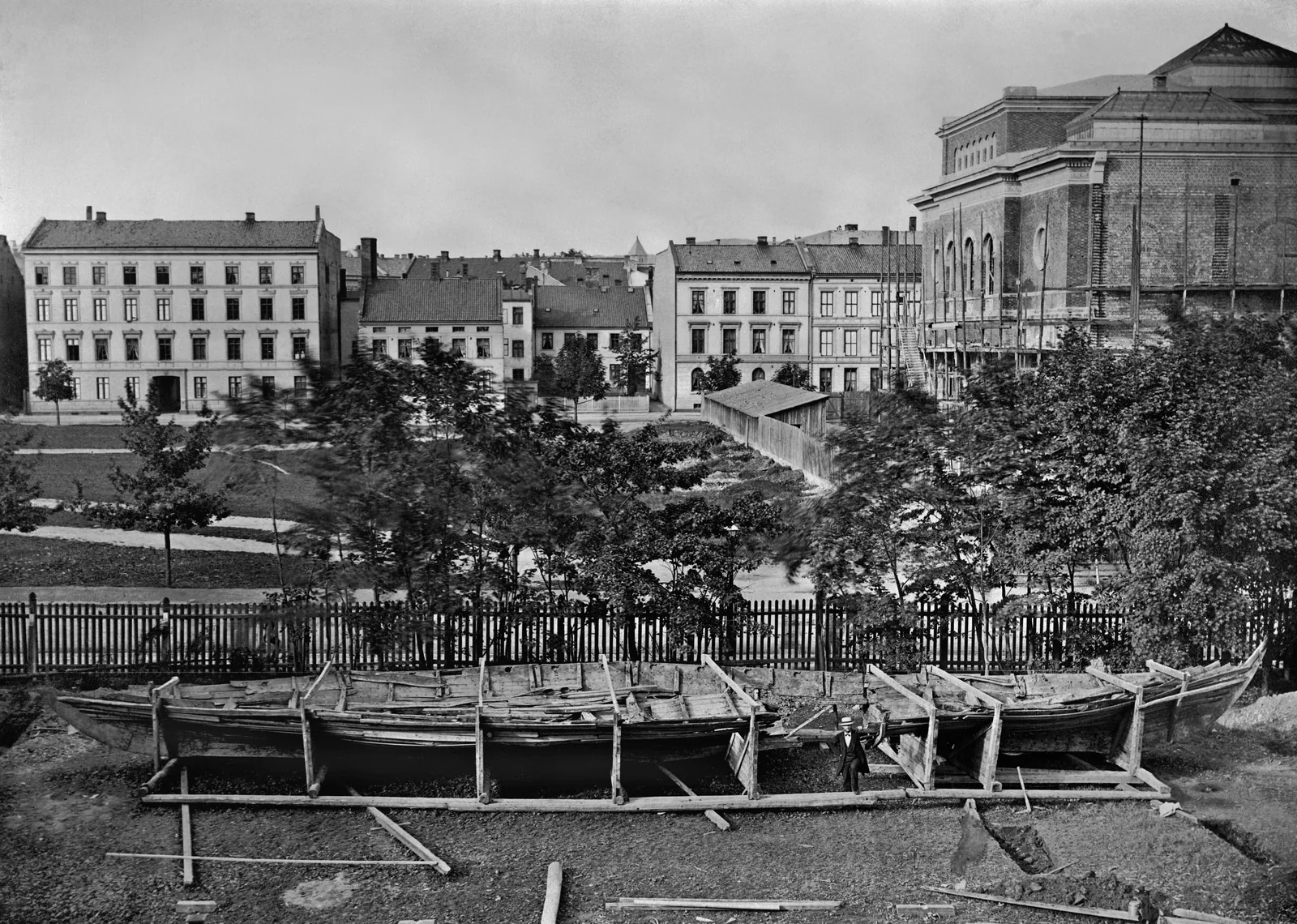
Clinker construction produced a flexible hull
Viking Age shipbuilders overlapped hull planks and fastened them together in clinker construction. Frames and internal structure supported a relatively light hull capable of flexing in waves rather than behaving like a rigid box.
The technique demanded skilled woodworking and careful material selection. Surviving ships demonstrate that Scandinavian builders could produce long, fine hulls with sophisticated curves using hand tools and experience rather than modern plans.
Shallow draft expanded tactical options
A longship could operate in relatively shallow water, approach beaches and move into some river systems. That gave raiding and military forces access to locations unavailable to deep-draft vessels.
The ability to land without a major harbour was strategically valuable. Crews could move quickly between sea and shore instead of depending on established port infrastructure.
Oars and sail served different conditions
A square sail provided efficient propulsion when winds allowed, while oars gave crews control in calms, narrow waters, harbour approaches and tactical situations.
This dual propulsion system made the vessel versatile. It also imposed a labour burden because a large rowing crew required food and space that could otherwise carry cargo.
Speed came at the expense of bulk capacity
The long, narrow hull that supported speed was not ideal for carrying livestock, heavy freight or settlement supplies. Norse communities used broader vessels for those purposes.
This is why comparisons between a longship and a knarr are more useful than treating “Viking ship” as one design. Each type reflects a different economic and social requirement.
Warriors, status and ships were closely connected
Large longships required substantial timber, skilled labour and crews. Elite ownership and royal fleets therefore expressed political power as well as maritime capability.
Sagas and poetry celebrate famous ships, but archaeological finds provide a necessary corrective by revealing ordinary construction details and variation beyond literary ideals.
The Gokstad and Oseberg finds changed modern understanding
Burial ships such as Gokstad and Oseberg preserved hulls that would otherwise have disappeared. They show clinker planking, steering arrangements, rigging evidence and craftsmanship at a scale that textual descriptions cannot match.
Burial context also introduces bias. These were prestigious objects associated with elite graves, not a random sample of every vessel used around Scandinavia.
Longships supported expansion but did not explain it alone
Norse raiding, trade and settlement depended on ships, but also on political conditions, population movement, markets and route knowledge. A technologically capable vessel does not create expansion by itself.
The longship’s real significance is that it lowered the logistical barrier to moving armed groups rapidly through coasts and waterways, making certain strategies practical.
Design choices involved practical trade-offs
The important question about Viking Longships is not whether it was simply fast, large or technologically advanced. Every vessel balanced cargo capacity, crew size, draft, stability, manoeuvrability, materials and operating waters.
A shallow hull could gain beach or river access while sacrificing volume. A broad merchant hull could move freight economically while responding more slowly. Rig and propulsion reflected winds, voyage length and available labour.
Operating the ship required an entire support system
Sail handling, steering, rowing where relevant, anchoring, pumping, cargo management and emergency repairs demanded practised labour. Longer voyages added water, food, spare cordage, timber and tools that competed with cargo for space.
Ports supplied shipwrights, warehouses, labour, freshwater and safe anchorages. Ship design therefore cannot be separated from the economy that kept the vessel useful after launch day.
What surviving evidence can and cannot establish
Reconstructions of Viking Longships draw on wreck archaeology, artistic depictions, written descriptions, experimental replicas and later craft traditions. Each source has limits.
A wreck represents one vessel, an image may be stylised and a modern replica necessarily fills gaps. Where evidence disagrees, ranges and alternatives are better than invented precision.